August
Monthly Weather Review
Rainfall Total – 2.4 in
Highest Temperature - 102°F
Lowest Temperature - 63° F
Average Wind Speed – 5.3 mph
Tuesday August 4th
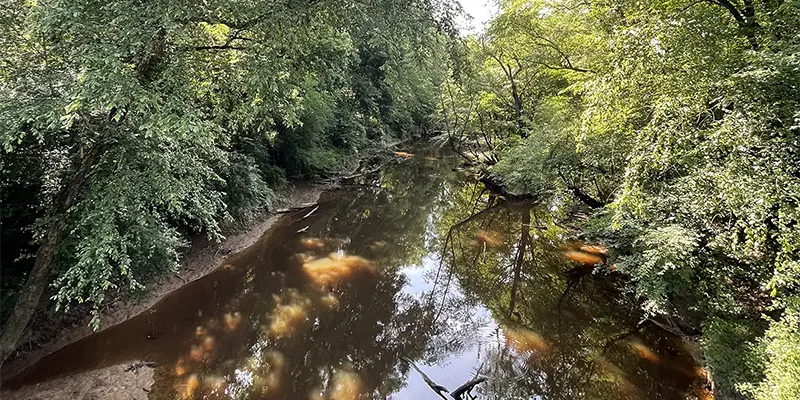
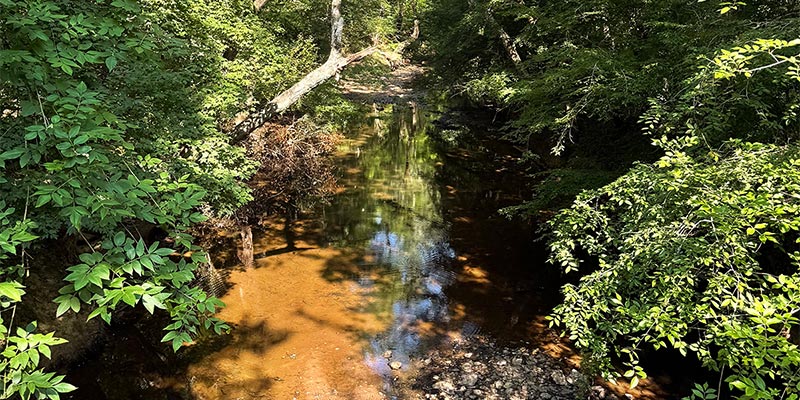
- Thompson Creek turned a striking bright orange following a heavy rainstorm. Heavy rainfall can wash sediment and naturally occurring minerals from the surrounding soil into waterways, temporarily causing dramatic changes in watercolor.

Thursday August 6th
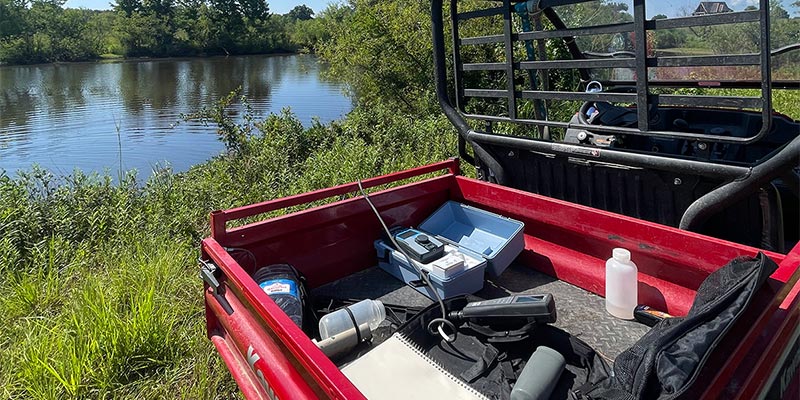
- CWF staff conducted monthly water quality sampling and were treated to a sighting of two North American River Otters (Lontra canadensis). These semi-aquatic mammals are excellent swimmers and can remain underwater for several minutes at a time.
Friday August 7th
- While conducting pond sampling, CWF staff startled a young White-tailed Deer (Odocoileus virginianus) fawn that had been hiding near the pond's edge. Fawns often rely on remaining still and hidden in vegetation to avoid detection.
Tuesday August 11th
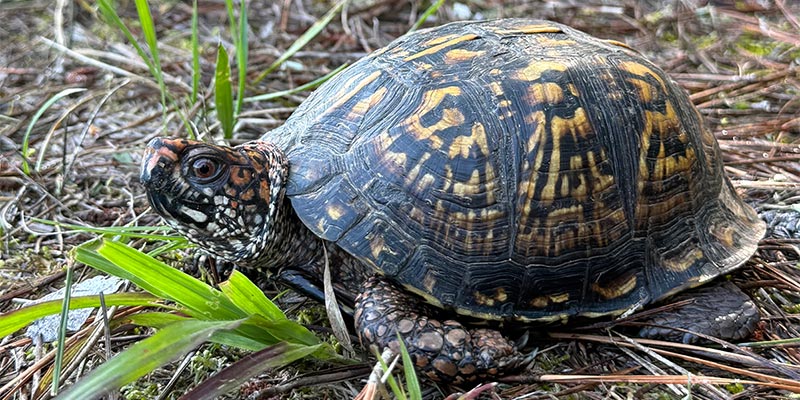
- Once again, a Common Box Turtle (Terrapene carolina) was found along one of the trails while staff drove the game camera route. Summer has certainly been a busy season for box turtle sightings on the property.
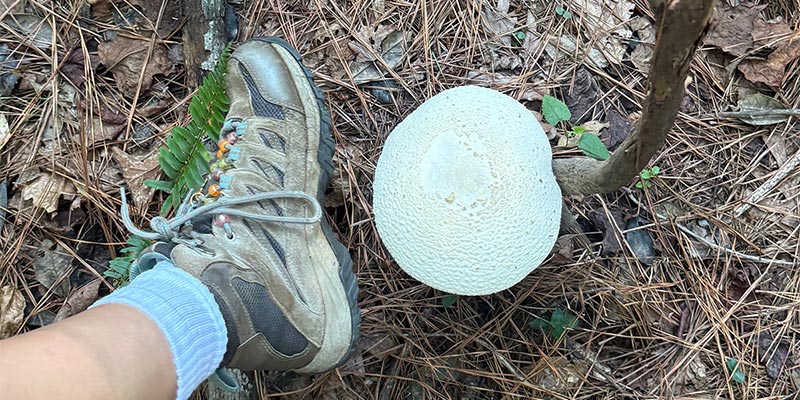
- A large mushroom, most likely in the Amanita genus, nearly the size of a staff member's foot, was discovered growing in the forest.
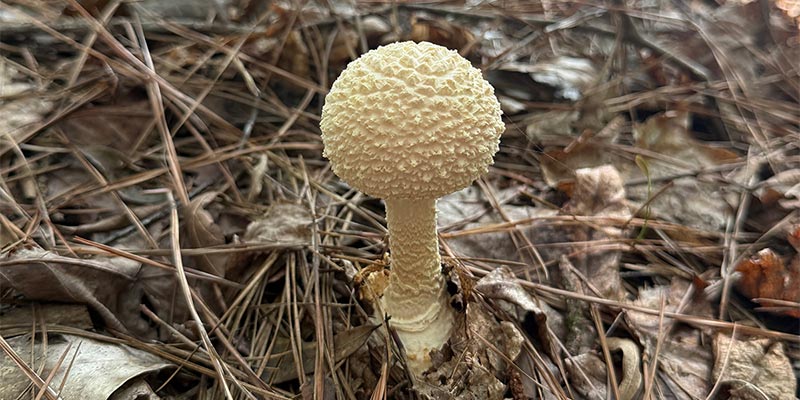
- Another smaller mushroom, also in the Amanita genus, was found emerging through the leaf litter on the forest floor. Fungi are important decomposers, helping to return nutrients from organic material back into the soil.
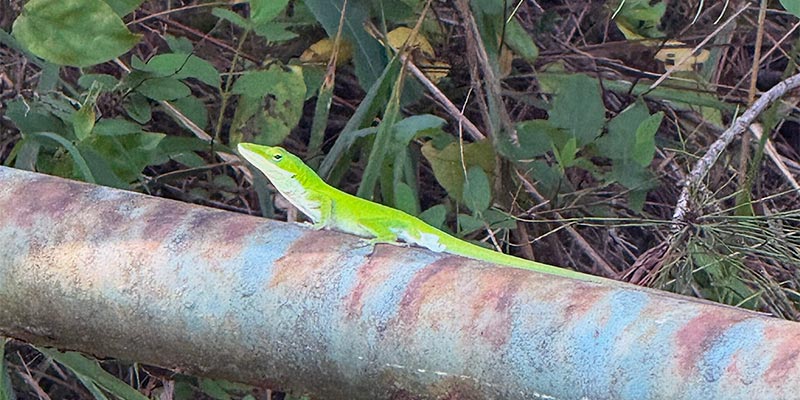
- A Green Anole (Anolis carolinensis) was found hanging out on one of the gates. These small native lizards can change from green to shades of brown depending on factors such as temperature, stress, and their surroundings.
Wednesday August 12th
- While sampling at Thompson Creek, a Belted Kingfisher (Megaceryle alcyon) flew underneath the bridge and gave its distinctive rattling call. Kingfishers are often found around waterways, where they hunt for small fish and other aquatic prey.
Thursday August 13th
- Just outside the CWF staff office, two young Eastern Cottontails (Sylvilagus floridanus) were seen grazing in the freshly cut meadow.
Friday August 14th
- Two White-tailed Deer (Odocoileus virginianus) fawns were observed grazing together in one of the old horse paddocks.
Thursday August 20th
- A Great Blue Heron (Ardea herodias) was perched on a log in Thompson Creek, patiently watching the water for a tasty snack to swim by. These skilled hunters often remain almost completely still while waiting for fish and other aquatic prey to come within reach.
Friday August 21st
- While making her daily rounds, a CWF staff member observed two young White-tailed Deer (Odocoileus virginianus) does bedded down together in the forest.
Monday August 24th
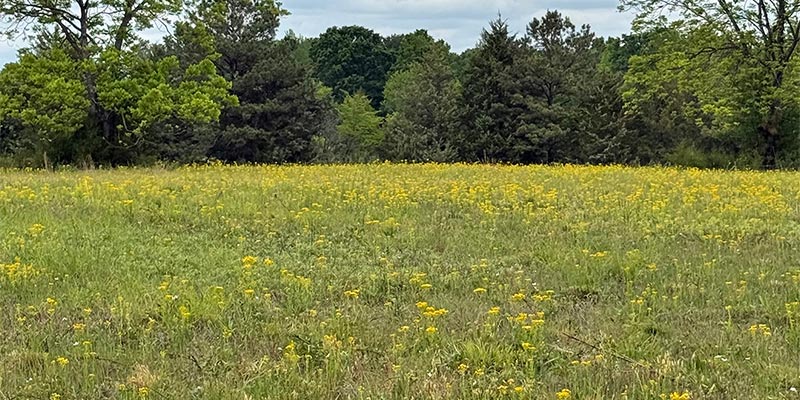
- CWF staff noticed a group of bright yellow flowers growing in one of the meadows. A closer look revealed Bitter Sneezeweed (Helenium amarum), a native wildflower that blooms during the summer and into early fall.
Tuesday August 25th
- While out sampling, CWF staff spotted a Coyote (Canis latrans) that appeared larger than those typically observed on the property and had a noticeable reddish tint to its coat. Coyotes can vary considerably in size and coat color, ranging from gray and brown to more reddish tones.
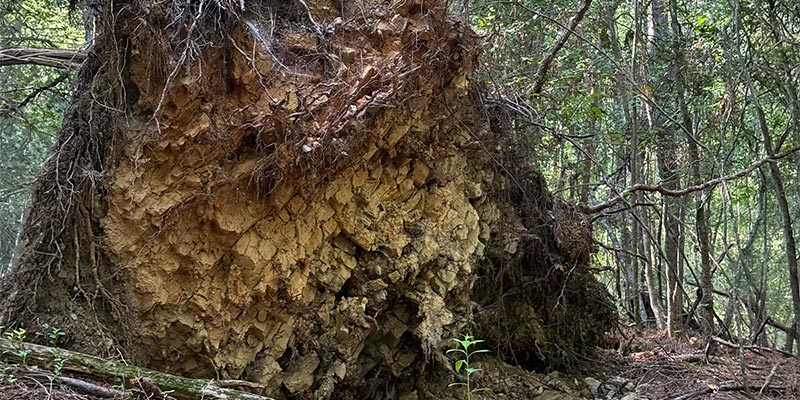
- Staff stopped to observe a fallen tree whose trunk had created a large hole near the ground. Features like these can provide valuable shelter and hiding places for small mammals and other wildlife.
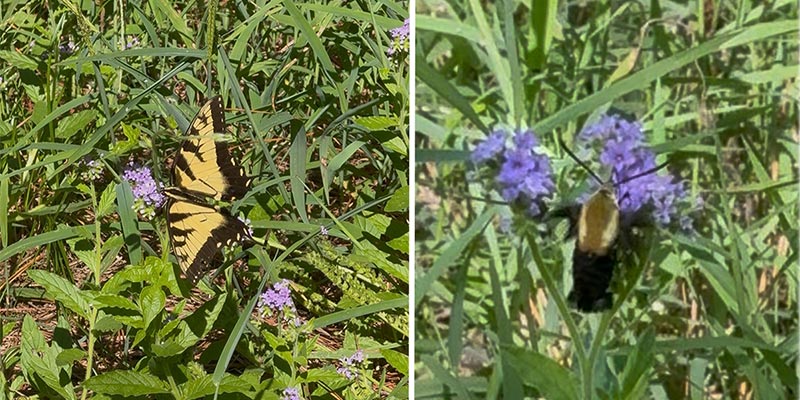
- An Eastern Tiger Swallowtail (Papilio glaucus) and a Hummingbird clearwing moth (Hemaris thysbe) were observed visiting purple flowers. Both butterflies and hummingbird moths use their long mouthparts to reach nectar deep within flowers.
Friday August 28th
- While showing a Winthrop University professor around the property, staff observed an impressive four owls in one day! Three were Barn Owls (Tyto alba), while the fourth was a Barred Owl (Strix varia). Seeing multiple owl species in a single day made for an especially memorable property tour.
Monday August 31st
- CWF staff witnessed a large Red-tailed Hawk (Buteo jamaicensis) capture an Eastern Gray Squirrel (Sciurus carolinensis). Red-tailed Hawks are powerful predators that feed on a variety of mammals, birds, and other prey.