SRESFS: “Three Days and Two Nights in the Dark.”
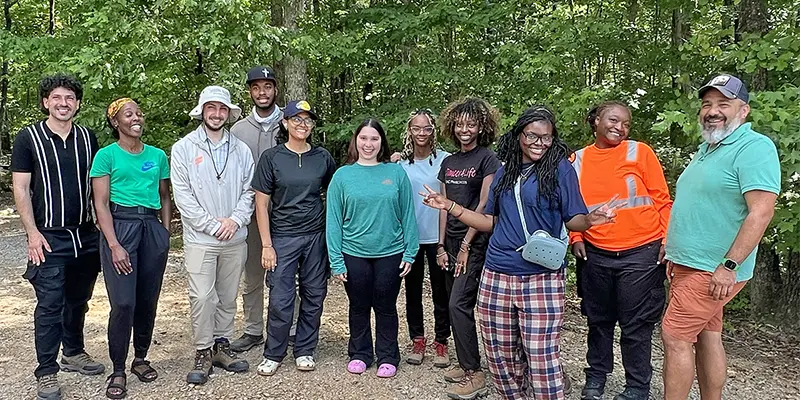
In June, a group of college students studying environmental science, came to Southern 8ths Preserve through the Savannah River Environmental Sciences Field Station, a program with more than three decades of experience bringing students from historically Black colleges and universities together for intensive training in botany, soil science, environmental science, and environmental health. The program was designed to give students knowledge and practical experience they could apply working with sponsoring federal and state agencies. Today, the program is sponsored by the U.S. Department of Energy.
For Dr. Joniqua Howard and Dr. Warner E. Guzman, the partnership with Carolina Wildlands Foundation has provided something especially valuable: a place where students can take what they have learned and put it to work in a living landscape.
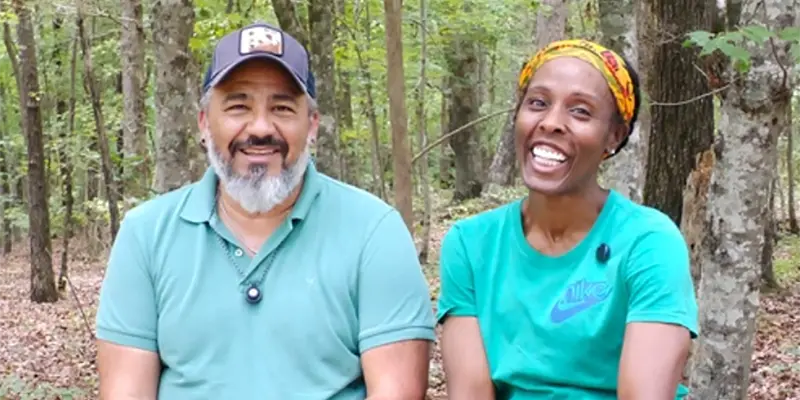
Dr. Warner E. Guzman and Dr Joniqua Howard at Southern 8ths Preserve
“I discovered the Carolina Wildlands Foundation while doing some research,” Howard explained. A connection through Bryan Rabon who was working for South Carolina DEHC, eventually led her to Carolina Wildlands Foundation founder Brad Turley and to using Southern 8ths Preserve as a potential field site for the students. The opportunity has proven to be a good fit – this has been program’s second year visiting the Preserve.
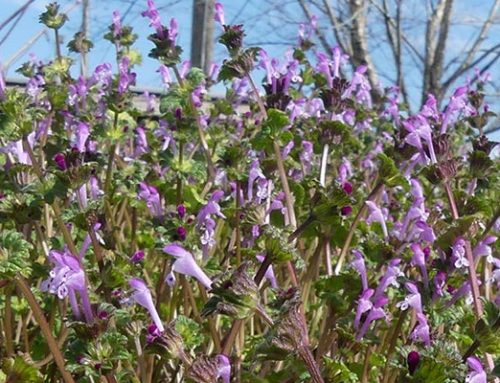
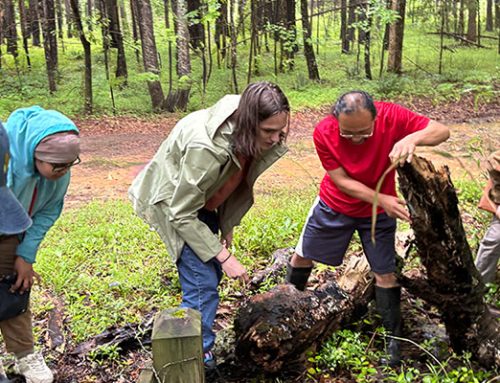
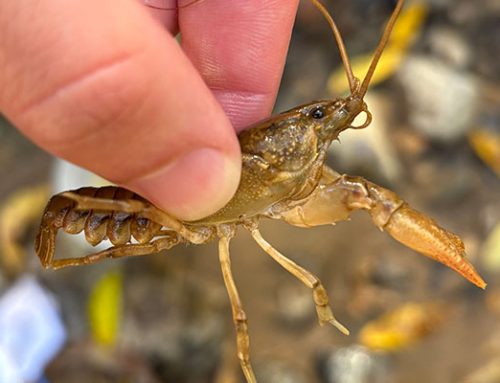
“It has been extremely helpful,” Howard said. She pointed to the range of opportunities available at Southern 8ths—from Thompson Creek and its surrounding vegetation and wildlife to bird studies and moth research—as an outstanding learning experience for the students.
Bringing learning outdoors
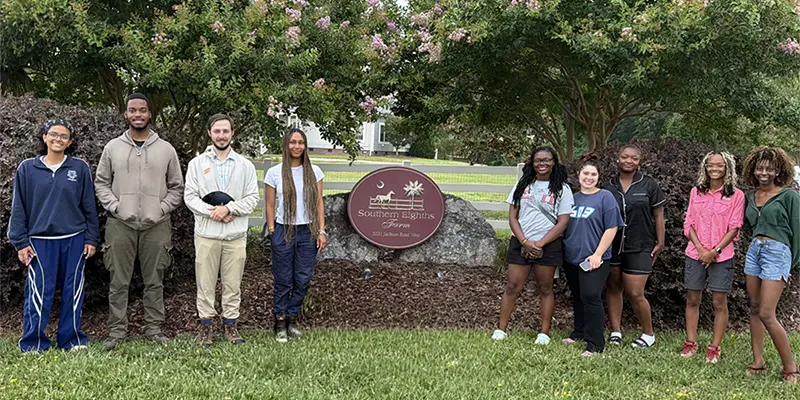
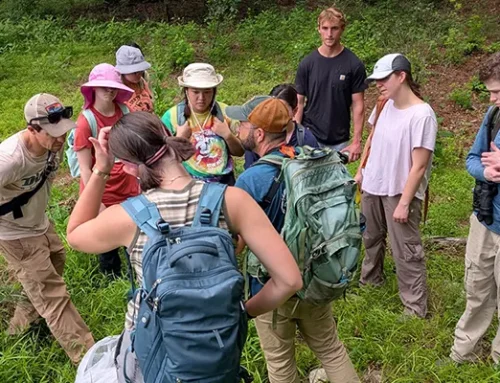
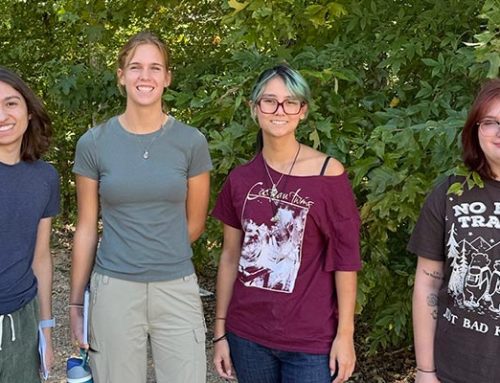
2026 students at the entrance to the Preserve
For many of the students, the experience at Southern 8ths represents their first substantial hands-on outdoor field experience. Guzman said that is an important part of the program’s purpose.
“We want to provide them with the best experience possible because many of them have never worked in the field before,” he said. The goal is to give students an opportunity to find out whether environmental fieldwork is something they want to pursue as a career before they graduate.
The program deliberately combines two kinds of learning that are often separated.
“Some internships have students spend forty hours in a laboratory, while others have them spend forty hours in the woods,” Guzman said. “Our program combines both technical instruction and hands-on field experience.”
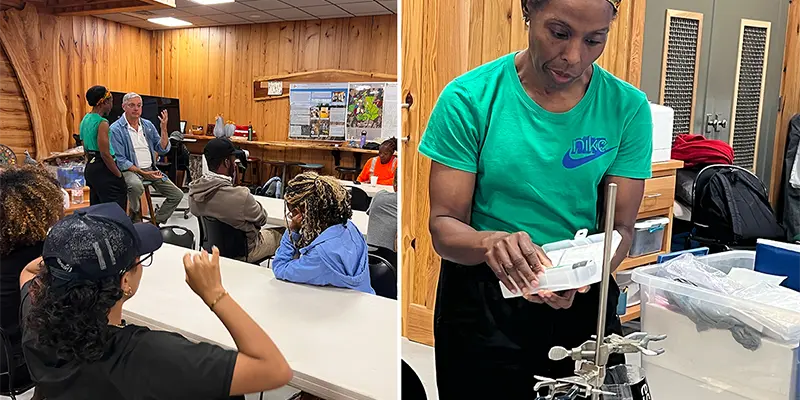
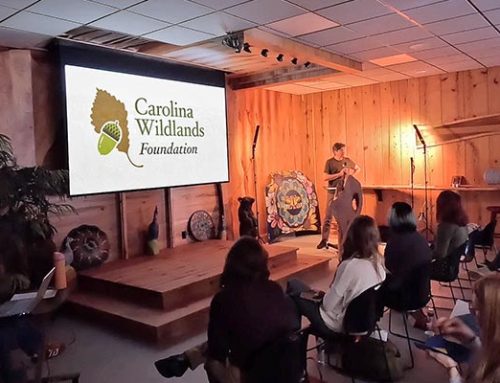
CWF founder Brad Turley welcomes students, Dr, Howard sets up equipment in the Learning Center
Three Days and Two Nights in the Dark
The students’ Environmental Health course is built around a disaster simulation called “Three Days and Two Nights in the Dark.”
The scenario is daunting: a Category 5 hurricane has struck the area, destroying the electrical grid and contaminating the water supply. The students are divided into two communities and challenged to restore two essential services—electricity and safe drinking water. They must generate electricity using solar energy and produce potable water using solar water disinfection, or SODIS.
The exercise isn’t an isolated activity. It builds on three weeks of preparation in which the students study water resources and watersheds, conduct water-quality measurements, identify stream and channel types, and evaluate different sources of water for their potential use in an emergency.
By the time students reach the Preserve, Guzman explained, they have already been introduced to the basic concepts and field techniques. Southern 8ths gives them the opportunity to put everything together.
“That’s when many of them suddenly understand why they’ve been learning all of these concepts,” he said. “Everything begins to make sense.”
Learning to communicate science
The field experience also exposes students to another essential part of environmental science: learning how to work with other people!
The students come from a wide geographic area, including states such as California, Alabama, Texas, North Carolina and Virginia, as well as Puerto Rico. This year, the program even included a student from Hawaii. During their initial training, the students establish a common foundation of knowledge so that they can come together at the field site prepared to work as a team.
That teamwork is not always easy.
Howard and Guzman have seen firsthand how today’s students can struggle with face-to-face communication. Smartphones have become an integral part of daily life, but the field station deliberately creates an environment where students must put their devices aside and interact directly with one another. “Our program focuses on more than just science. We also emphasize communication, teamwork, and interpersonal relationships,” Howard explained.
At the field site, smartphones are permitted when they serve a scientific purpose—for example, as field notebooks—but otherwise they stay in backpacks or pockets.
“Everyone understands that they’ve signed up for an experience in the woods, and that experience requires them to be fully present,” Guzman said. “Out here, it’s still pen and paper.”
For Guzman, communication isn’t an extra skill layered onto the science. It is fundamental to the science itself. “Students need to learn how to tell the story of their science and communicate it to people who may have no scientific background,” he said. “Science is fundamentally about communication.”
Clear communication also makes scientific work reproducible. Students must be able to document their methods and observations so that another person can understand—and repeat—their work.
Preparing the next generation
Howard and Guzman see this field experience as an effort to prepare students for careers in environmental science, conservation, public health and related fields.
Howard sees an approaching critical need for trained professionals as experienced workers leave the field and new positions become available.
“We are training the people who will eventually replace us,” she said. “That is really our goal. We want to provide students with the knowledge and experience they need so that the next generation is prepared to take over.”
The professors believe that training must include both technical knowledge and the ability to work effectively with other people.
A.I. technology will continue to change the way environmental scientists work, Guzman said, but it won’t eliminate the need for human connection.
“We need more H.I.—human interaction and human interface—not less,” he said.
That may be one of the most important lessons students take away from their time at Southern 8ths. Here, the landscape is the classroom, the laboratory and a place where students discover that by working together- the science they have studied can be used to address real-world problems.
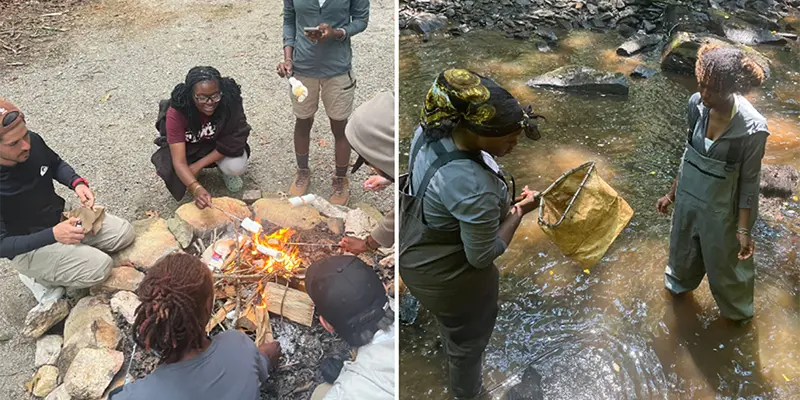
No matter the activity collaboration is key!
For Carolina Wildlands Foundation, providing that kind of place—where students can explore, investigate, collaborate and experience the natural world firsthand—is an important part of the Preserve’s growing role as a living laboratory for environmental education.