Young Scientists Ask Questions – Seek Answers
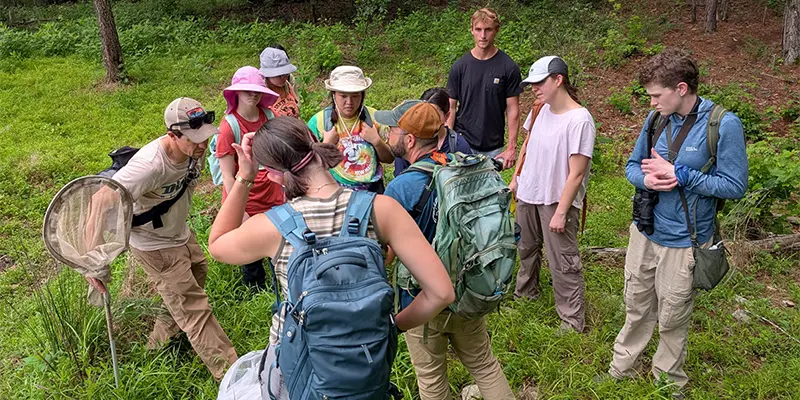
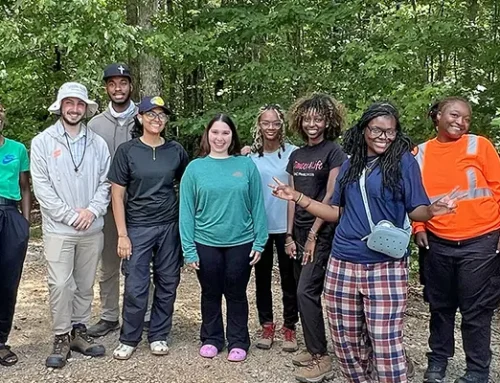
June 19th marked the completion of the Carolina Wildlands Foundation’s 4-week Paid Summer Field Research Internship at Southern 8ths Preserve, an immersive internship program that challenged undergraduate and recent graduate students to experience ecology not from a textbook, but by asking questions of nature itself.
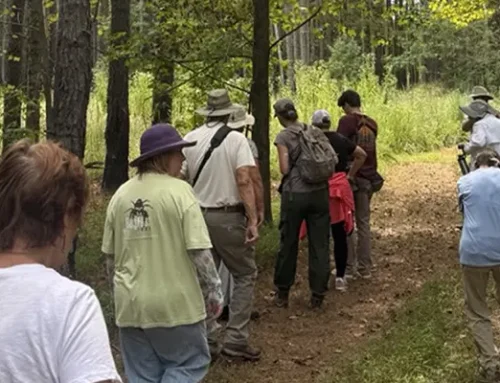
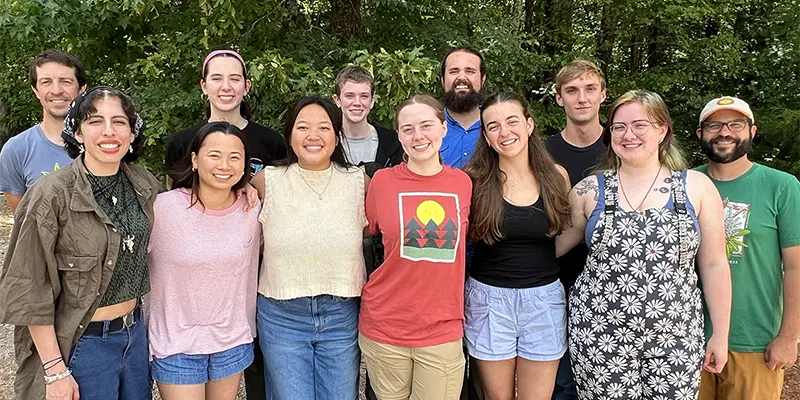
After four weeks of hiking forests, exploring wetlands, surveying prairies, and working long days in the South Carolina summer heat, nine aspiring environmental scientists gathered to share what they learned.
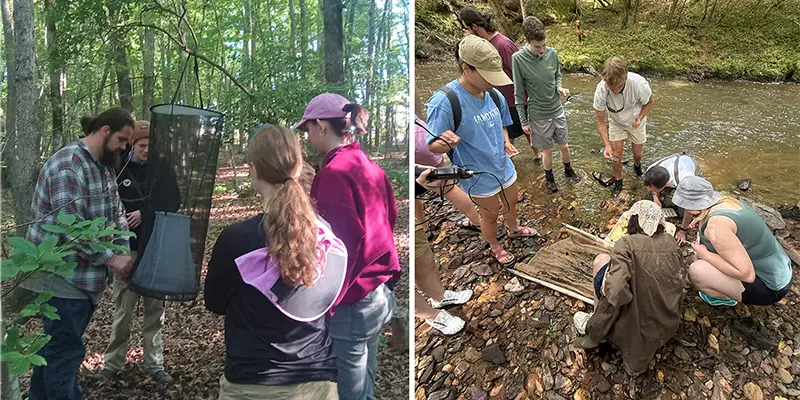
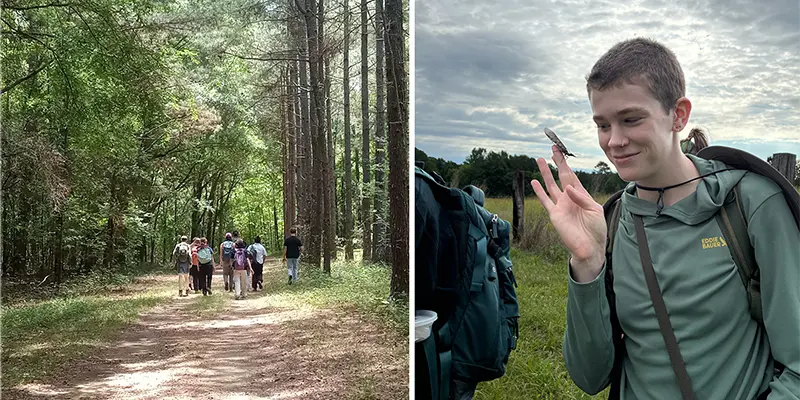
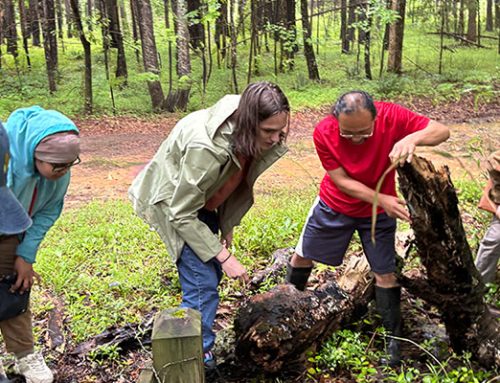
The internship gave students three weeks to develop field research skills under the guidance of Dr. Eric LoPresti, assistant professor of biological sciences at the University of South Carolina; Dr. Tim Miller, veteran field biology instructor and co-program manager; and graduate researcher Grant Foster. Students learned study design, species identification, data collection, and scientific communication.
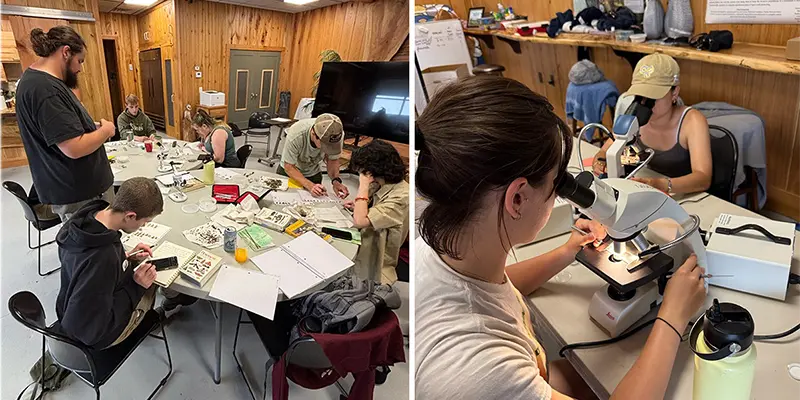
Then came the real test.
Each intern had just four days to develop an original research question based on observations made while exploring the Preserve, collect and analyze data, and prepare a formal scientific presentation defending their findings at a June 19th symposium.
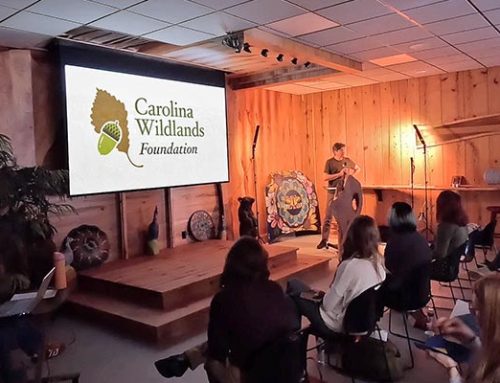
Opening the symposium, Carolina Wildlands Foundation Acting Executive Director David Harper welcomed guests before Foundation founder Brad Turley spoke about the importance of giving students opportunities to experience nature firsthand and being able to tell the story of what they have learned to the wider world. Dr. Miller served as master of ceremonies.
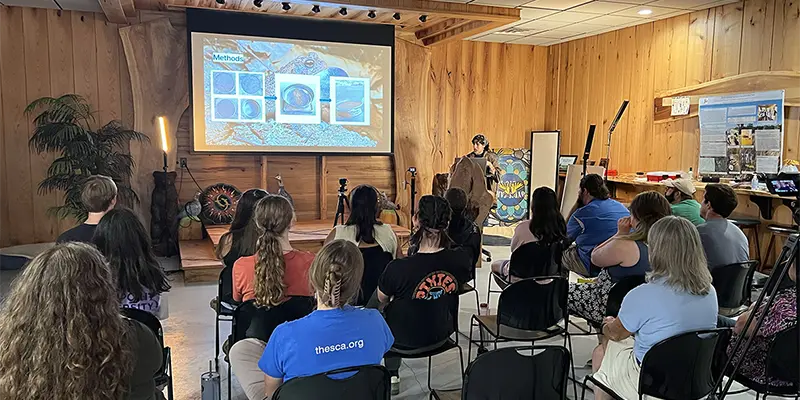
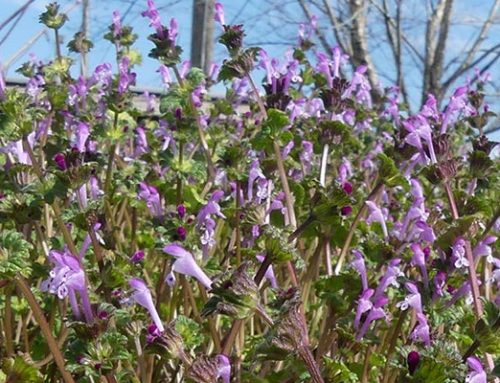
The presentation showcased the diversity of questions that can emerge from careful observation. Henry Roberts of the University of South Carolina found that moth richness and abundance increased farther from forest edges. Fellow University of South Carolina student Lilly Ammons explored the possible function of the glossy petals of hairy buttercup flowers. Van Truong of Mississippi State University investigated whether shrub cover could predict Eastern Bluebird nest box occupancy, while Madison Vaughan of the University of North Carolina examined vegetation as a predictor of moth abundance in loblolly pine stands.
Ale Granda of New York University studied how forest type, soil composition, and soil moisture influence the presence of Southern Toads. Katie Freeland of the University of North Carolina compared the effects of native and invasive fire ants on arthropod communities. Rebekah Olls of High Point University examined how vegetation around pond edges affects frog calling intensity, while Clemson University student Joelle Wallace investigated how nectar robbing influences pollinator behavior in trumpet vine. Katy Stokes of Sewanee: The University of the South explored the relationship between insect herbivory and the growth of crown beard plants. Together they demonstrated the scientific process at its best—asking questions, collecting evidence, and drawing conclusions from careful observation.
The internship was about more than research techniques. Students spent hours working together in the field, learning from one another while experiencing the realities of field biology. Long days outdoors, changing weather, and unexpected challenges became part of the educational experience, as did friendships that developed along the way.
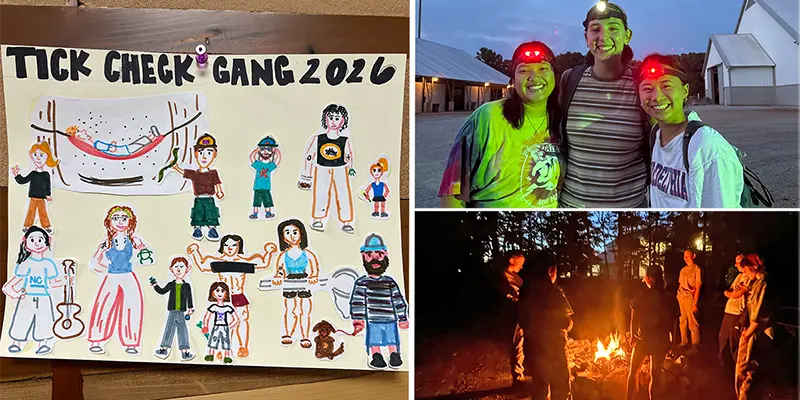
By the time the internship concluded, it was clear the students had grown not only as researchers but also as a team. While many admitted they were sad to see the experience end, nearly all expressed a desire to continue pursuing careers in ecological research, conservation, wildlife biology, or related environmental fields.
Carolina Wildlands Foundation larger purpose.
As science education increasingly emphasizes laboratory research, opportunities for immersive field experience have become less common. The Foundation has focused on internships and fellowships to help bridge that gap by placing students in the field where observation, curiosity, and discovery can enhance learning.
Sitting in edge of Piedmont Fall Zone, The Carolina Wildlands Foundation Biological Field Station at Southern 8ths Preserve has proved to be an ideal outdoor classroom, offering pine stand, rocky uplands, hardwood forest, prairies, wetlands, and creeks that inspired questions no laboratory could provide.
As the interns packed their gear and headed home, they left with much more than research project for their resume. They departed with practical field experience, new professional relationships, and a deeper appreciation for the ecosystems they hope to study—and protect—for years to come.