Duckweed: Nature’s Tiny Water Cleaner
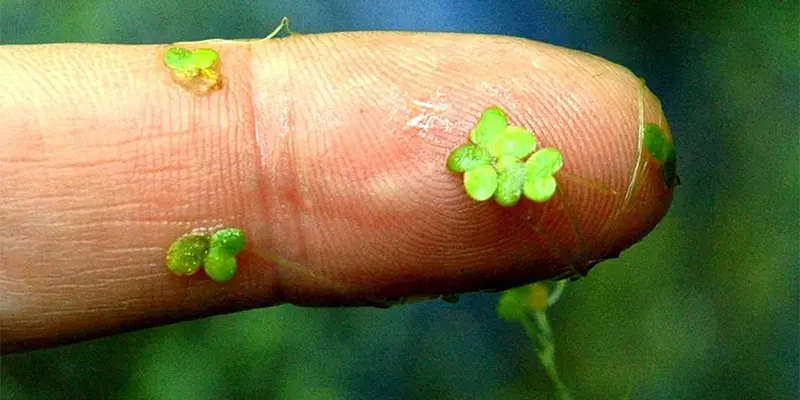
Have you ever looked at a pond covered in tiny green leaves and thought, “Well, that’s a lot of little plants!”? You may have been looking at Duckweed! Duckweed ( Lemna) is one of the smallest flowering plants in the world. These tiny, floating plants may not look like much, but they can actually play an important role in water quality. Duckweed takes nutrients from the water to grow, including nitrogen and phosphorus. These nutrients are naturally found in aquatic ecosystems, but too much of them can become a problem.
Excess nitrogen and phosphorus can enter waterways through sources such as fertilizer runoff, animal waste, and wastewater. When there are too many nutrients available, algae and aquatic plants can grow rapidly. Duckweed can help by absorbing some of those excess nutrients as it grows. In the right conditions, a healthy population of duckweed can act almost like a tiny floating filter, helping remove nutrients from the water. And there’s another benefit: duckweed provides food and habitat for some aquatic organisms and can even be eaten by waterfowl—which is where it gets its name!
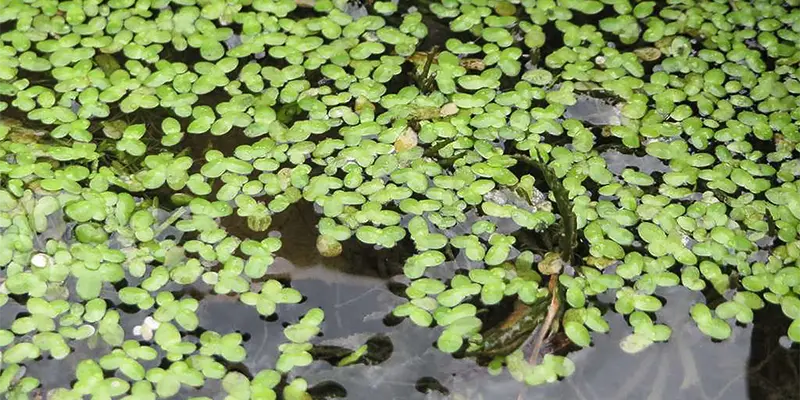
Here’s where Duckweed gets interesting.
Duckweed reproduces very quickly. If a pond has an abundance of nutrients, particularly nitrogen and phosphorus, duckweed can spread across the surface and form a thick green blanket. That might look harmless, but a dense layer of Duckweed can block sunlight from reaching plants and organisms below the surface. It can also interfere with gas exchange between the water and atmosphere. As large amounts of duckweed and other plants die and decompose, microorganisms use oxygen during the decomposition process. This can contribute to lower dissolved oxygen levels, which can make life difficult for fish and other aquatic organisms.
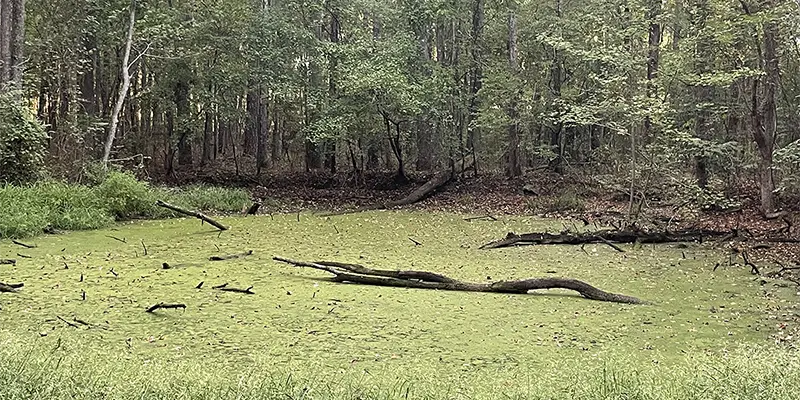
So, ironically, the same nutrient-rich water that helps duckweed grow can eventually contribute to water-quality problems. Duckweed isn’t necessarily the cause of poor water quality. Sometimes, it’s more like a clue. A pond suddenly covered in duckweed may be telling us that there are plenty of nutrients available in the water. That’s why observing aquatic plants can be an important part of understanding what’s happening in an ecosystem.
The next time you see a little green plant floating on the surface of a pond, take a closer look! Who knew something as tiny as duckweed could help clean our water, provide habitat and food, AND give us clues about the health of an entire ecosystem? Sometimes, the smallest things can tell us the biggest stories about our water.
Author: Anna Privette