Life In Thompson Creek: Crayfish Species Study
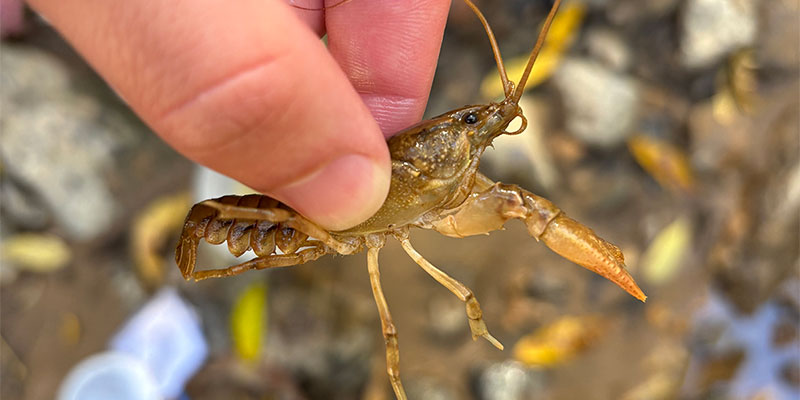
South Carolina is home to 37 native species of Freshwater Crayfish! What species can we find at Southern 8ths Farm? What behaviors can we observe from them? What ecological role do these “miniature lobsters” play in Thompson Creek? The only way to find out is to locate them out in the wild!
What’s a Crayfish Anyway?
Freshwater Crayfish, or more colloquially known as Crawfish or Crawdads, are a unique type of crustacean closely related to lobsters and crabs. They are characterized by their strong pinching claws, armored body, and broad tail used to escape predators. Depending on the species, Crayfish typically reach 2 to 5 inches in size by adulthood. Crayfish reach their highest diversity and abundance right here in the Southeastern region of the United States! All native crayfish species found east of the Continental Divide belong to family Cambaridae, by far the largest of the three total Crayfish families. The big question is, out of all 400 species included in this family, which ones can be observed in Thompson Creek and its tributaries? While we know that Crayfish inhabit in the creek, a true survey or study has not been conducted on the Southern 8ths property to identify Crayfish diversity. Two other questions also remain: where would be the best place to find Crayfish on the property, and how can we be exactly sure of the species identified?
Methods of Capture
Because the abundance of Crayfish in Thompson Creek is still unknown, various search sites were chosen across the property, as shown on the map below.
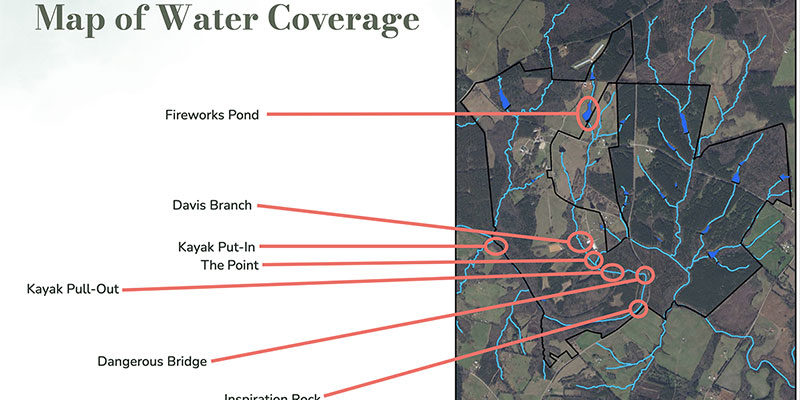
We used two methods to capture Crayfish in Thompson Creek. The first and most successful was by hand collection, or simply putting on waders and looking under the water for the little guys!
Crayfish are most active at night, where they hunt for food and forage from underwater algae or plant matter. They hide under logs, sediment, and rocks during the day to stay safe from predators. Flipping over rocks quickly became the best way to locate a Crayfish, because it takes advantage of their nocturnal behavior. There’s a trick to flipping over rocks without startling the Crayfish. Grabbing the rock by one of its edges and gently pulling up on it both reduces sediment buildup in the water column and keeps the animal underneath from scurrying away. Typically, once the water clears up, a Crayfish will just be stationary on the stream floor, flicking its antennae. This provides the perfect opportunity to grab them from the back of their carapace without hurting them. You always want to pick up a Crayfish by the exoskeleton and with a gentle grip. You do NOT want to squeeze them or crack their shell.
The second method was setting up traps with bait. Three small minnow traps were baited with Vienna sausages, sardines in soybean oil, and both sardines and sausages. Two were placed in Fireworks Pond, while the other was placed at Inspiration Rock. Unfortunately, no Crayfish were caught in these traps, likely due to a severe storm sweeping the property that week, keeping Crayfish hiding under rocks or in their burrows.
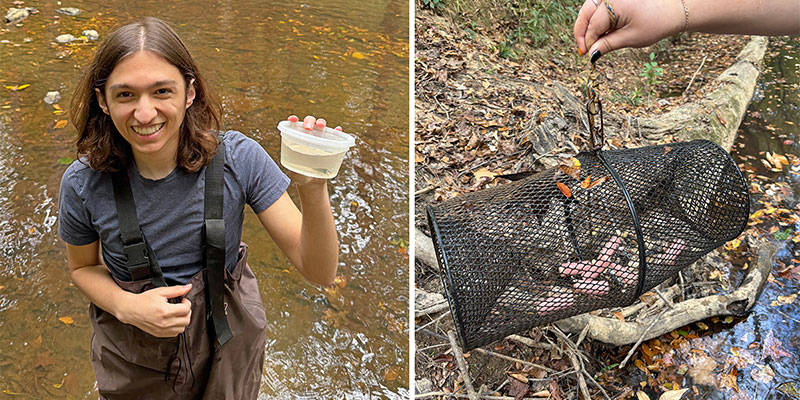
Left: Hand capturing in the creek, Right: baited minnow trap
Indicators of Crayfish
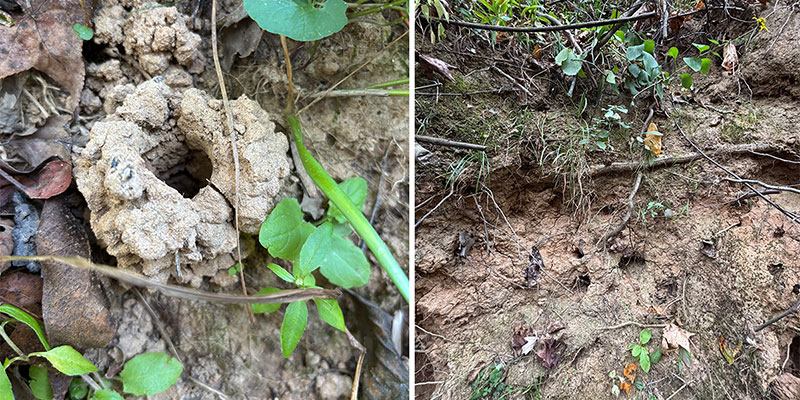
Crayfish typically spend most of their lives underwater, crawling along the bottom of the creek and hiding underneath rocks. However, most Crayfish species in the Southern U.S. exhibit a strange behavior in which they dig elaborate burrows in the soil with their claws, which can even branch to the surface! These entry and exit holes found on land are known as Crayfish chimneys (photo on the left) and can be used as an indicator of whether or not the animals are likely to be found in a particular area. Burrowing holes above the creek’s water line could also be observed (photo on the right), another indicator of these little crustaceans!
Who Did We Find?
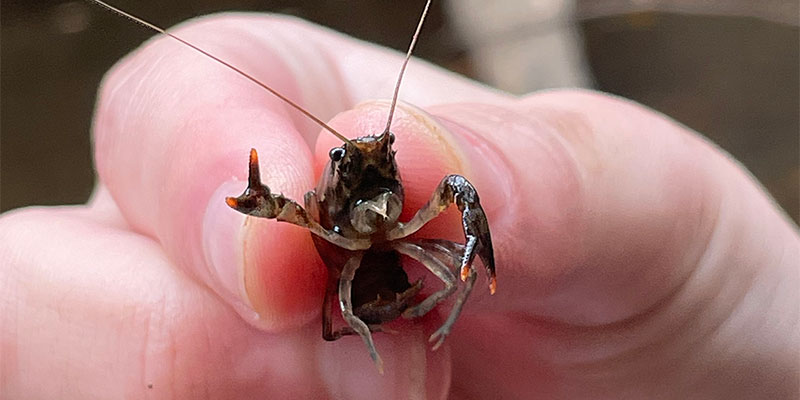
Out of all seven sites, two different species were found and identified. Observable physical characteristics like patterns and color distinguish the two species. And with help from the iNaturalist app to compare observations in the field with other’s findings, we can be certain these are the correct species. The most frequently found species was the Acuminate Crayfish (Cambarus acuminatus). Acuminate Crayfish are identified by the bright orange tips of their claws, light blue ends of their walking legs, a dark shield-like pattern on their back shell, and orange markings on the first segment of their abdomen.
On the other hand, we observed a handful of Variable Crayfish (Cambarus latimanus). They are identified by their beige color, the double striped pattern found on their abdomen, and the “dots” of brown color across the entire exoskeleton. While we only observed two different species, with a longer study and larger range surveyed for future projects, many more new species will likely be identified!
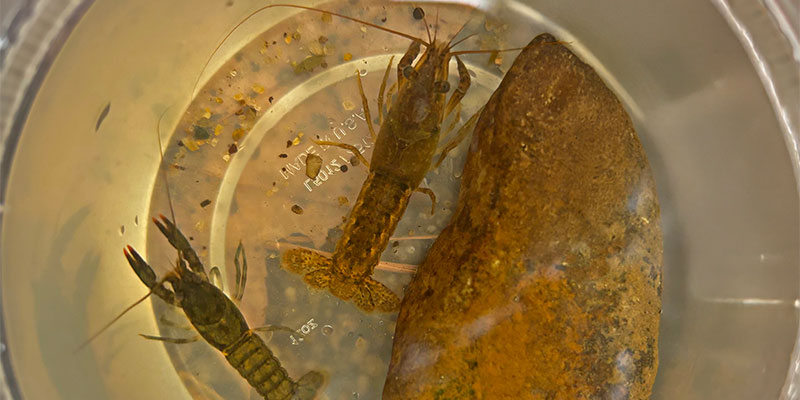
Acuminate Crayfish on the left. Variable Crayfish on the right.
Aren’t These the Same as the Ones We Eat?
Crayfish are a popular food source for humans as well as an economically relevant group of animals to fisheries and aquaculture facilities. But it’s important to separate the Crayfish we eat from the ones we find at Southern 8ths Farm. The Louisiana Red Swamp Crayfish (Procambarus clarkii) is the species harvested the most for culinary and commercial purposes. These have been introduced to South Carolina and are considered invasive since they compete with the native species here, including those identified above.
Why are Crayfish Important?
The Acuminate and Variable Crayfish are considered a keystone species for Thompson Creek and other freshwater ecosystems not because they’re apex predators, but because so many organisms eat them! Birds, mammals, fish all rely on Freshwater Crayfish for at least a portion of their diet. Perhaps the most reliant on Crayfish is the River Otter, where exoskeleton pieces are commonly found in their latrines (areas where they deposit scat). Other than supporting a complex food web, Crayfish help recycle nutrients back into the water and feed on decomposing plant and animal matter. As opportunistic omnivores, Crayfish will pretty much eat any algae, plant, or animal matter that comes their way. Feeding on algae specifically helps keep the water clean from harmful blooms and sunlight blockages. Crayfish burrowing behaviors aerate the soil and bring new nutrients and oxygen to the water, required by all organisms living underneath.
How Can We Protect Crayfish?
Runoff from harmful chemicals and pesticides in the home can seep into streams, rivers, and creeks inhabited by Crayfish. These agents can weaken their exoskeleton and even begin the dissolving process. If you must use pesticides, be mindful of how they might flow into the ground or nearby freshwater sources. When swimming or fishing in freshwater, it is also important to use the Check-Clean-Dry strategy for any clothing or equipment submerged in freshwater. Check your items for any organisms attached, thoroughly clean all items used in the water, and make sure all items are dried properly to prevent mold or larval growth. This will help to reduce the introduction of invasive species.
Lastly, Crayfish thrive in naturally forested streams like those at Southern 8ths Farm. Restoring these riparian forests is crucial to keeping Crayfish abundant in South Carolina. Even the simplest actions can help, such as avoiding littering and mowing, as well as preventing livestock from grazing in these areas. The Crayfish will thank you!
Author: Erik Antonio Vega
Environmental Biology Student, Wingate University