Invasive Plant Report – A Place for Everything
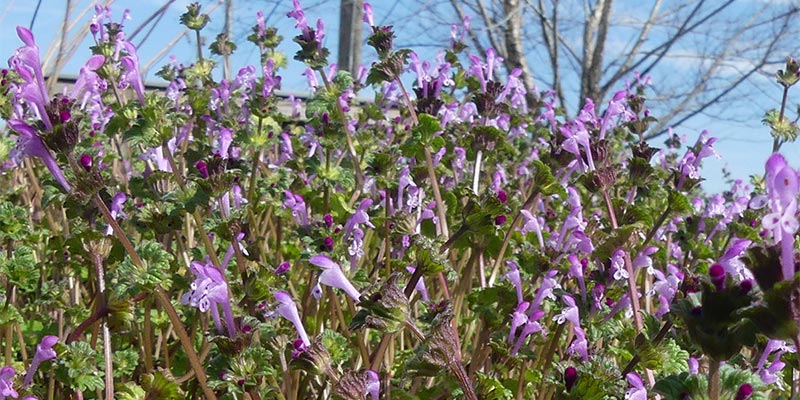
Beauty, May Be Only Skin Deep…but its impact can go a long way!
Spring is approaching. We are madly dusting off the mowers and sharpening the trimmer blades. Preparations for the new season are underway! As vibrant plants begin to emerge, it’s important to remember that appearances can be misleading. Perhaps not every visually appealing plant is beneficial – some of them may be doing more harm than good, and some may simply be growing in the wrong place. Now is an ideal time to assess which species support your landscape goals and which may need to be removed. Even then, maybe they don’t need to go too far. Relocation rather than disposal may be sufficient.
After all, there’s a place for everything, and everything has its place.
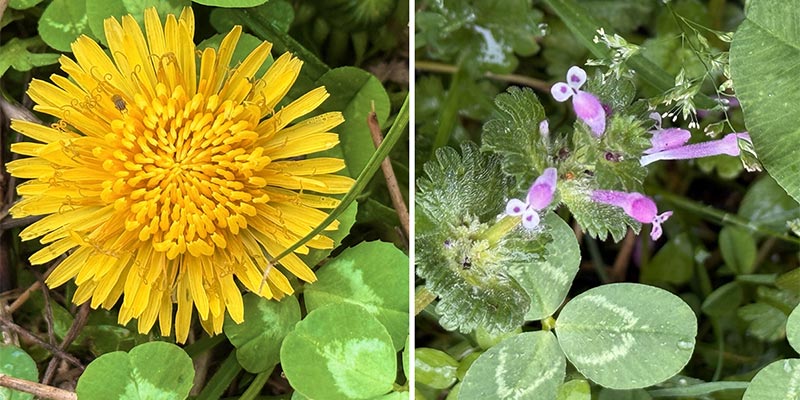
Common Dandelion with White Clover, Henbit Deadnettle with White Clover.
Henbit Deadnettle (Lamium purpureum) is as familiar in our landscapes as the Common Dandelion (Taraxacum officinale), and for good reason. Both species have been part of the Piedmont and Coastal Plain ecosystems for centuries, influencing local environments in ways that are both beneficial and disruptive. Dandelions, believed to have arrived with early European settlers on the Mayflower, spread quickly across New England through wind-dispersed seeds, livestock movement, and agricultural activity. Settlers valued them as a reliable medicinal and culinary resource.
Henbit followed a similar path. Native to Europe, western Asia and North Africa, it became widespread in North America through contaminated livestock grain and escaped garden plantings. Today, it is praised online for its antibacterial, antifungal, and anti-inflammatory properties. Yet despite these appealing attributes, Henbit compete with native spring plants and is still classified as a low-impact ecological threat.
While many ground-cover plants in the southeastern United States are not native, they do offer certain functional benefits – erosion control among them. Still, understanding their origins and ecological impact helps the environmentally conscious make informed decisions about what truly supports a healthy landscape.
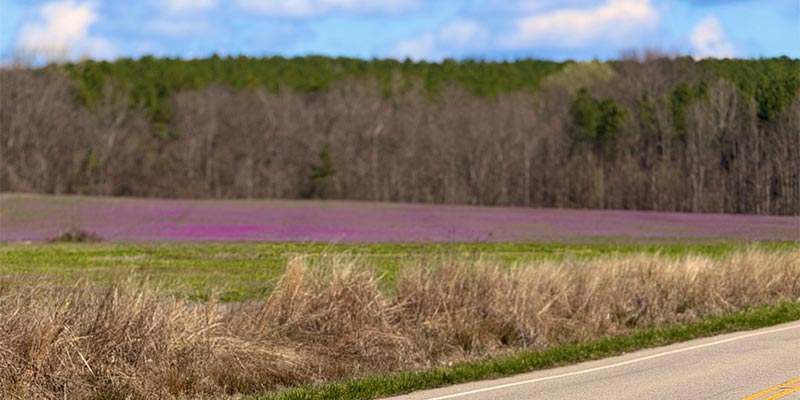
Field of Deadnettle in bloom.
When Henbit Deadnettle (Lamium amplexicaule) teams up with Purple Deadnettle (Lamium purpureum) it can be a beautiful site to see, and a very common one in the southeast. But in your yard, they can take away all your hopes for a healthy attractive lawn. Together, these plants don’t just blend in – they take over, turning what should be a thriving greenspace into a battleground. Their partnership is surprisingly powerful, and once they gain ground, they can quickly become a genuine threat to the lawn you’ve worked so hard to maintain.
Dandelions, Henbit Deadnettle and Purple Deadnettle frequently appear together because they are all cool-season opportunists that exploit a very specific window in the landscape. They share almost identical germination timing (40-60° F) and possess nitrogen-rich soil preferences. Before you realize it, they’re everywhere you look, making it almost impossible to grow a nice lawn of Tall Fescue (Lolium arundinaceum) or the ever-controversial Bermuda Grass (Cynodon dactylon) which can act like an invasive and move into near-by flower beds.
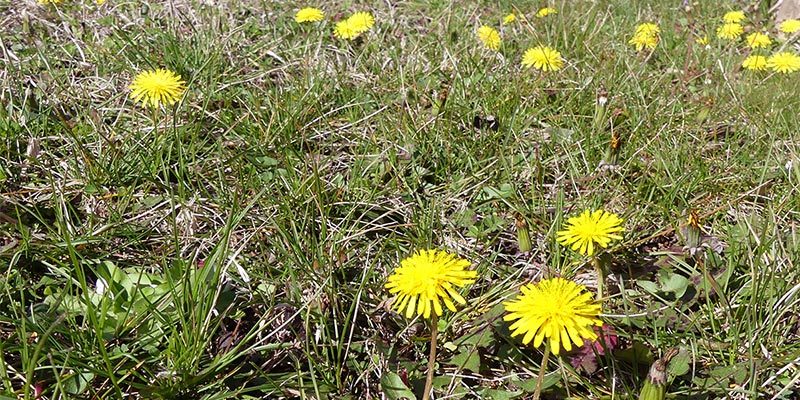
Dandelions flowering in early spring.
But a thick healthy lawn acts as a superior, natural filter, for air and water. So, should we just credit these weeds for supporting early arrival pollinators and their medicinal qualities? Or do we try to get rid of them so that we can enjoy our yard and have an occasional game of croquette?
Here are 7 reasons (that go deeper than just the surface) to maintain a beautiful lawn:
- Prevents Erosion and Runoff: Grass has a dense fibrous root system that holds soil in place, preventing it from washing away in heavy rain much more effectively than bare dirt or weed covered dirt.
- Cooling Effect: Lawns can act as a natural air conditioner through a process called evapotranspiration. Making them significantly cooler than asphalt or even weed covered areas.
- Air Purification: A healthy 5,000-sq-ft lawn produces enough oxygen for up to 34 people daily while trapping dust, smoke, and other airborne pollutants.
- Water Filtration: Grass acts as a natural water treatment system, removing impurities and pollutants from water as it moves through the soil and into the groundwater.
- Noise Reduction: A thick lawn functions as a noise absorber compared to hard reflective surfaces. Reducing noise levels up to 20 percent.
- Higher Property Values: Well-kept lawns improve curb appeal and can increase property value
- Safe Recreational Space: Natural grass provides a soft cushioned surface for children and pets, reducing the risk of injuries compared to hard landscaping materials.
Once the weeds are removed, the question remains: why are we contending with non-native species instead of the native plants that should occupy these spaces? Several native, early-spring ground covers are well-suited to compete for lawn space but are often absent.
Consider incorporating native species such as Carolina Crane’s-bill (Geranium carolinianum) in areas where you want ground cover without maintaining a traditional grass lawn. This is particularly useful in low-maintenance zones that tend to collect weeds. The landscaping area pictured below would be an ideal location to establish native groundcovers and to serve as a retaining wall. Establishing a healthy stand of Carolina Crane’s-bill can help suppress non-native species while supporting local ecosystems.
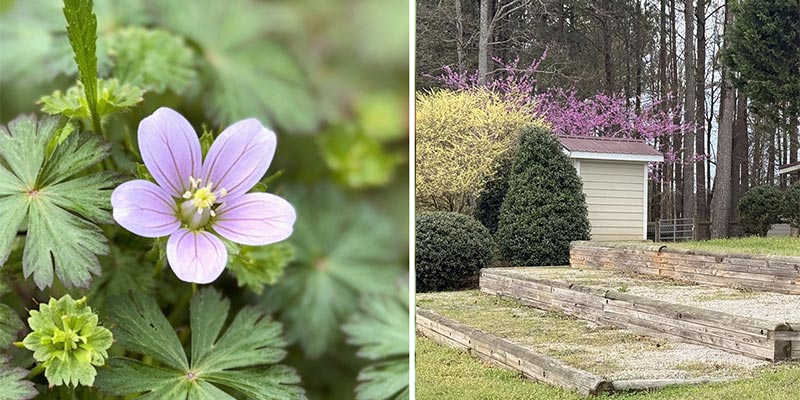
Carolina Crane’s-bill, Landscaping that could use native ground cover.
A well-maintained lawn can play an important role in a functioning ecosystem, much like a healthy prairie or a diverse woodland. Grasslands provide meaningful benefits to both humans and wildlife. While Henbit may be unwelcome in residential yards because it conflicts with landscaping goals, it can still offer value in nearby agricultural areas by helping reduce erosion during the winter and spring. In many cases, it may simply serve its purpose until native plants return and stabilize the environment.
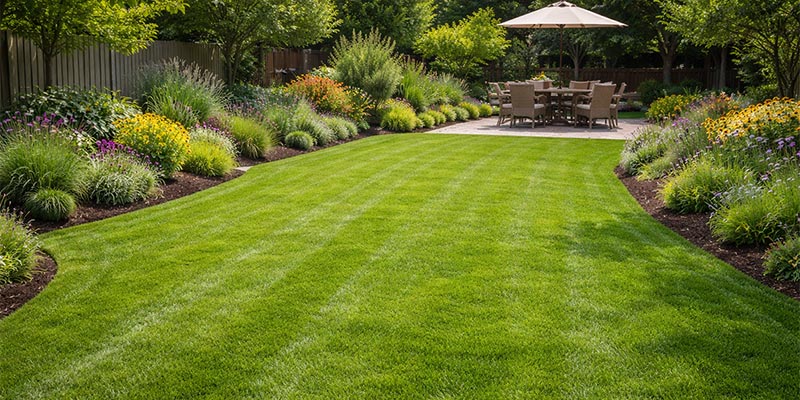
Fescue lawn.