Fall Field Biology Final Presentations
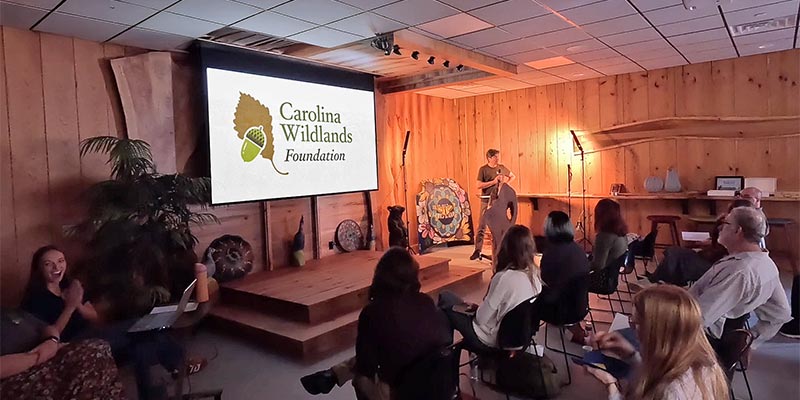
One of the most rewarding ways we mark the Spring and Fall calendars is hosting the Final Presentations of our Carolina Wildlands Field Biology Interns and Research Fellows. Since our first cohort in Spring of 2022, more than 50 students from five universities in our region have presented their findings on everything from microscopic Tardigrades to native forest plants, to one of our top predators, Eastern Coyote.
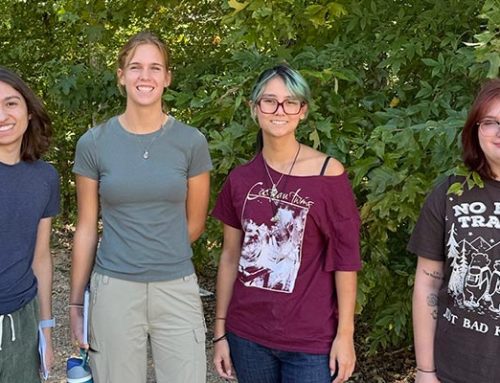
This year’s Fall Presentations at our Learning Center were one of our best yet, with a gathering of 11 undergraduate and graduate students and 4 professors from 5 universities and 2 staff researchers presenting on 13 research projects – all learning from each other about the incredible diversity of species in the web of life here in the Carolina Piedmont and at the Southern 8ths Field Station.
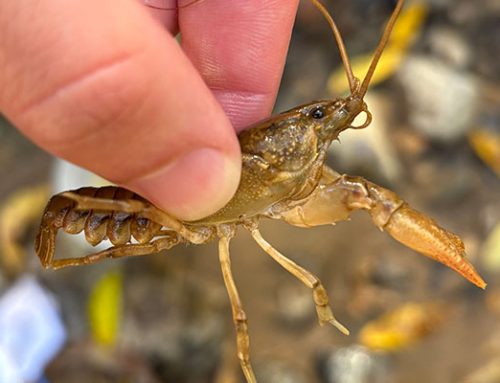
Our Fall Interns representing Wingate and Winthrop Universities shared their 10-week project findings, including studies of crickets, crayfish, and the plants, animals and fungi found in rotting trees and under cover boards. In this issue, you can read Wingate intern Erik Vega’s eye-opening article about his crayfish study.
The first Summer Interns at Southern 8ths, Madysin Nooks and Lucinda Duah, shared a video presentation of their findings on effective strategies for managing woody pioneer plants in Southeastern Grasslands, focusing on Sweetgum and Loblolly Pine in the Red Banks and Fireworks Prairies at Southern 8ths.
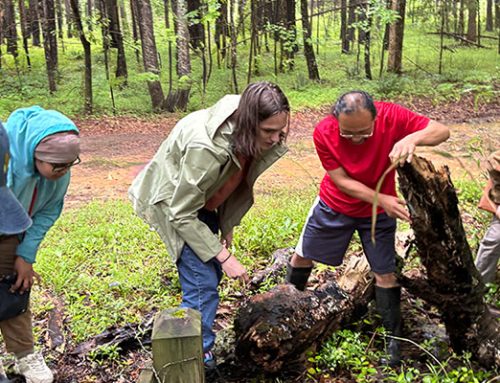
This year marked several firsts for our Research Fellows. The Herpetology Study at Southern 8ths is our first multi-university collaborative research project. Students from Winthrop, Francis Marion, and Queens University shared their experiences discovering the full range of reptile species (snakes, lizards/skinks, and turtles), and amphibians (salamanders, frogs, and toads) that can be found in local natural habitats, including lab work for salamander disease surveillance being conducted by Queens University. They created a grid map for their survey area and used non-lethal methods for documenting species diversity and abundance, including metal or plywood cover boards, turtle traps, field observation of ponds, wetlands, streams, and the tried-and-true method of rolling over logs.
The highlight of the day was another Research Fellow first — the unveiling of The Fish of Thompson Creek guidebook—created in partnership with Winthrop University. The entire project started with one simple question: “What kind of fish live in Thompson Creek?” Dr. Sal Blair and student Abby Bowers presented an overview of their field work and beautifully-illustrated book. Laura Tedeschi of Thread Communications walked us through the process of turning their research and graphics into the finished book.
Dr. Eric Lopresti of the University of South Carolina spoke about the importance of field study, highlighting how historical site records and herbarium collections connect past observations to present-day science—and thanks to digital tools and abundant field guides – how we’re living in a “golden age” of citizen science.
Carolina Wildlands Foundation field biology staff wrapped up the afternoon. Anna Privette sharing the results of her ongoing Longhorn beetle study and her work as water-testing steward, explaining both her methods and what’s been discovered so far. Morgan Warner presented updates from her long-running study of grassland-nesting birds and the use of bird boxes, as well as insights from the field station’s game-camera project, highlighting wildlife trends as part of the national Snapshot USA citizen-science program.
All in all, it was a wonderful day of science, discovery, and collaboration. We could almost feel the presence of the late, great field biology pioneer Jane Goodall, as the students demonstrated the meaning of one of her greatest quotes:
“Only if we understand, will we care. Only if we care, will we help. Only if we help, shall all be saved.”