Paid Internships
Summer Field Research Internships in Piedmont Ecology of the Carolinas
The Carolina Wildland Foundation offers undergraduate students and recent graduates an intensive four-week paid field experience in Summer at our 1,500-acre Southern 8ths Biological Field Station. Interns will learn natural history, conservation strategies, and research design before conducting an independent project on a topic of their choosing.
Program Details
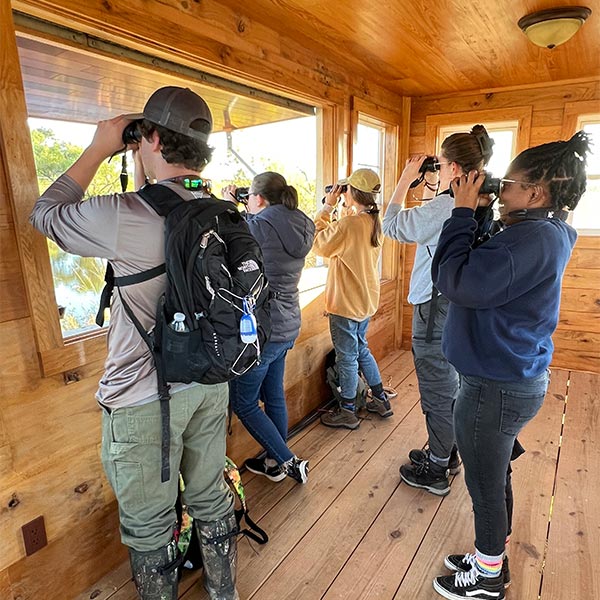
The Carolina Wildland Foundation offers undergraduate students and recent graduates an intensive four-week paid field experience in Summer at our 1,500-acre Southern 8ths Biological Field Station.
Participants will develop knowledge of the local natural history and conservation concerns. They will learn techniques in study design, data collection, and analysis by aiding in ongoing projects. Finally, they will gain skills in hypothesis testing and storytelling by conducting an independent research project on a topic of their choosing.
For additional information, contact Tim Miller at t1m1ll3r@gmail.com.
Program Requirements
Meet Our Program Staff
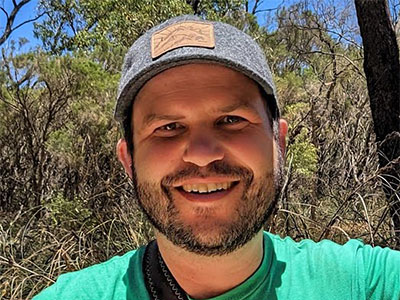
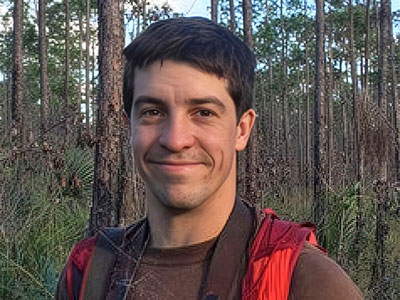
Dr. Tim Miller
Instructor
A full-time field course instructor since 2018, Tim is excited to join the intern program with Carolina Wildlands Foundation. Originally from Pennsylvania, he has roamed the United States with stops in Maine, Florida, and Colorado before completing his PhD at the University of California, Santa Cruz. While his degree is in botany and finding rare plants is a passion, you are just as likely to encounter him staring through binoculars at a bird high in the trees or flipping over logs on a warm rainy night to uncover a salamander. He currently lives across the piedmont in Winston-Salem, NC.
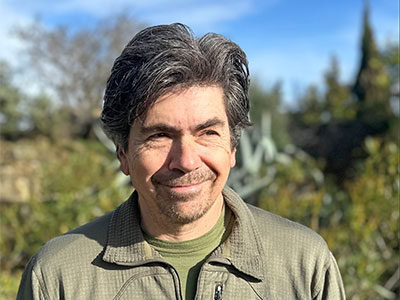
Dr. Eric LoPresti
Instructor
Eric grew up as a naturalist – rearing bugs, fish, and gardening. He went to Brown University where he studied ferns and caterpillars. He then worked in South America for Cornell’s Lab of Ornithology for two years, where he learned that despite loving birdwatching, he did not want to study birds. He completed a PhD on plant-insect interactions at UC-Davis in 2017, a postdoc on plant evolution at Michigan State, was an assistant professor at Oklahoma State, and has been an assistant professor at South Carolina since 2022. Besides natural history of plants and bugs – both job and hobby – Eric rides and races bikes.
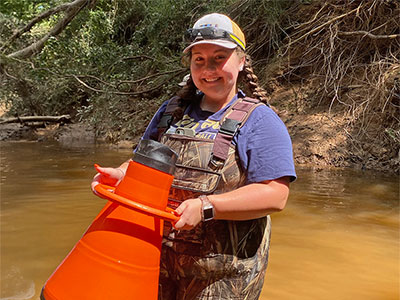
David Harper
Field Biology Program Coordinator
David is responsible for coordinating the Internship and Research Grant programs for Carolina Wildlands Foundation. His other roles have included supporting the development of the Foundation and the preservation of the Southern 8ths Preserve and Field Station. David previously served as Executive Director of the Pee Dee Land Trust. He is a graduate of the University of California – Berkeley, and the University of Pennsylvania, where he completed a master’s degree in Regional Ecological Planning focused on landscape ecology.
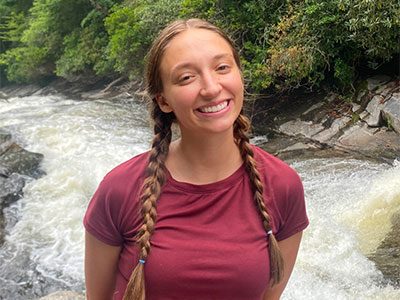
Anna Privette
Environmental Researcher
Anna is an environmental researcher who graduated from Wingate University in 2023 with a bachelor’s degree in environmental biology. Her work focuses on water quality monitoring and watershed health, with experience assessing parameters such as dissolved oxygen, temperature, pH, conductivity, turbidity, bacterial and nutrient levels. Her research centers on understanding how environmental conditions influence aquatic ecosystems and using data to support conservation and restoration efforts. Anna has also conducted field research on longhorn beetles, studying their diversity and habitat relationships to better understand forest ecosystem health and the role insects play in biodiversity.
Morgan Warner
Environmental Researcher
Morgan began her journey with CWF as a fellow studying small mammals through Francis Marion University. After graduation she went on to work at Cumberland Island National Seashore as a sea turtle technician, where she monitored over 1,000 sea turtle nests. She is currently a CWF employee and pursuing a master’s degree in Wildlife Biology and Fisheries at Clemson University. Her work includes monitoring Eastern Bluebird nesting, along with broader interests in wildlife ecology, field research, and conservation. Morgan is motivated by hands-on work that supports species conservation and effective habitat management.
Student Experiences
No one can give a better perspective on this unique educational opportunity than our interns.
“Everything on Southern 8ths Farm tells a story. The carved and painted logs tell the story and history of the land. The small graveyard we visited told the story of the family who once lived on the land. The trees planted in a row tell a story, and so do the remaining bits of the cattle farm that was once on some of the property. Everyone may have a different perspective, but everyone, and everything, can tell a story if you look and you think. The quiet and peaceful environment around the property can even tell the story of the hard work Brad and others have put into preserving the land.”
“I find myself paying more attention to the landscape trying to engrain every blade of grass in my memory and reflect on the entire experience from this last year. I have become close to all my fellow researchers… I have learned a lot about fieldwork through this project, but I have also gained some friends and hopefully lifelong connections with the people at Southern 8ths and those who are a part of Carolina Wildlands.”
“…the last trip was a beautiful one and this land will forever have a special place in my heart. To the future students, take it all in, enjoy it, and do your best to incorporate similar land across the world. We never know if we will be able to enjoy nature the way we have at the Southern 8ths property.”
“My time at Southern 8ths Farm was an excellent learning experience for me, and I am so glad I jumped on the opportunity to be an intern. I hope to return next year and continue my learning journey. I have a newfound love and respect for plants that I truly hadn’t had before. I can confidently say that I have grown as a person and an aspiring scientist during my time here.”
“I found it extremely impressive that the farm had many different types of environments from ponds to prairies to marsh-like wetlands.”
“The beauty of our survey is to see how a few hundred feet of difference in habitat can change the outcome of the small mammals caught. It is truly mind-blowing, but this is why you conduct research to see why things are the way they are.”
“It was awesome to go around the property with Winthrop University researchers, since they are from another school and we are from Francis Marion, and it was great to see what they are doing in addition to our own research.”
Education Partners